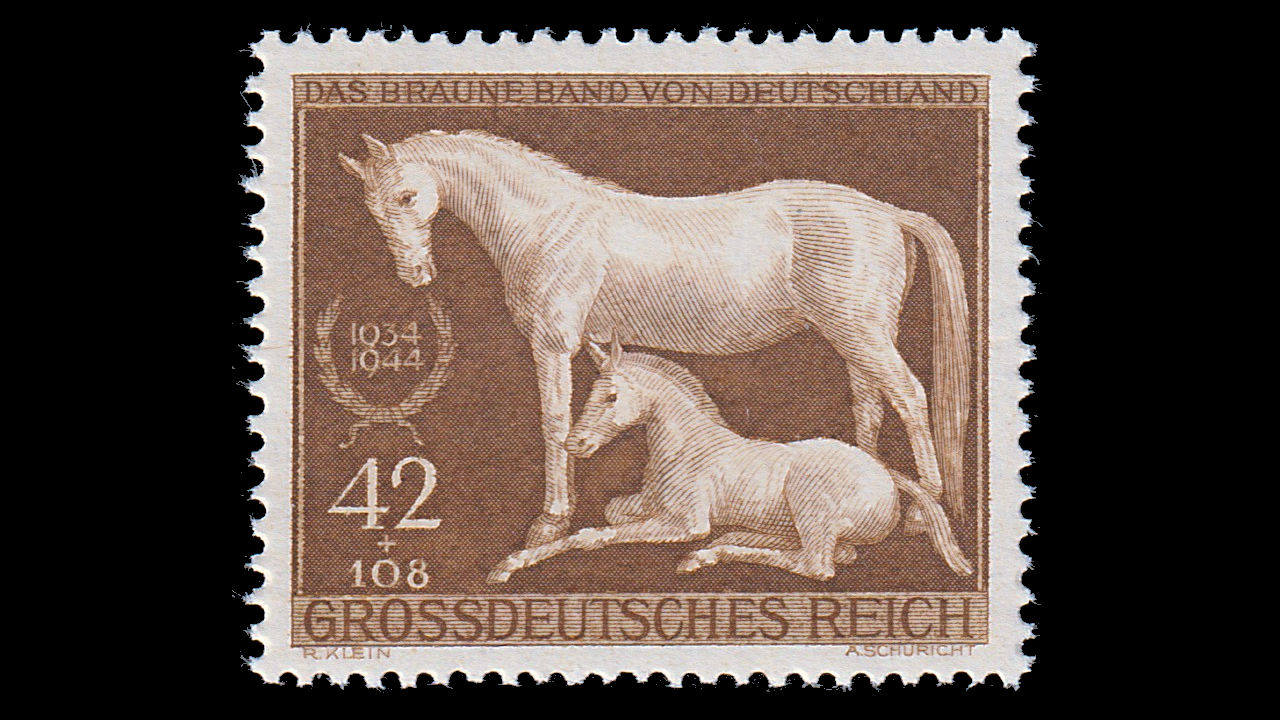
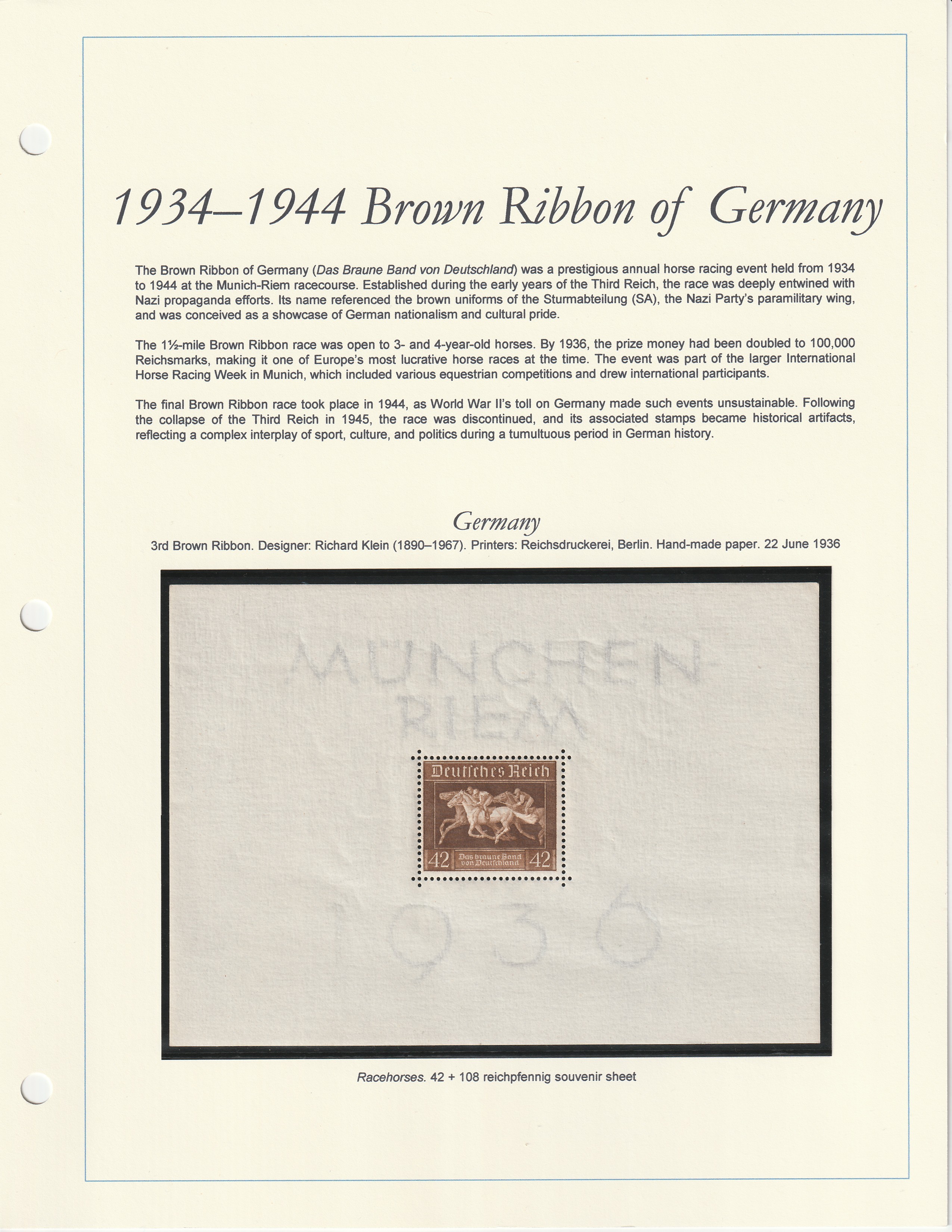
The Brown Ribbon of Germany (Das Braune Band von Deutschland) was a prestigious annual horse racing event held from 1934 to 1944 at the Munich-Riem racecourse. Established during the early years of the Third Reich, the race was deeply entwined with Nazi propaganda efforts. Its name referenced the brown uniforms of the Sturmabteilung (SA), the Nazi Party’s paramilitary wing, and was conceived as a showcase of German nationalism and cultural pride.
The 1½-mile Brown Ribbon race was open to 3- and 4-year-old horses. By 1936, the prize money had been doubled to 100,000 Reichsmarks, making it one of Europe’s most lucrative horse races at the time. The event was part of the larger International Horse Racing Week in Munich, which included various equestrian competitions and drew international participants.
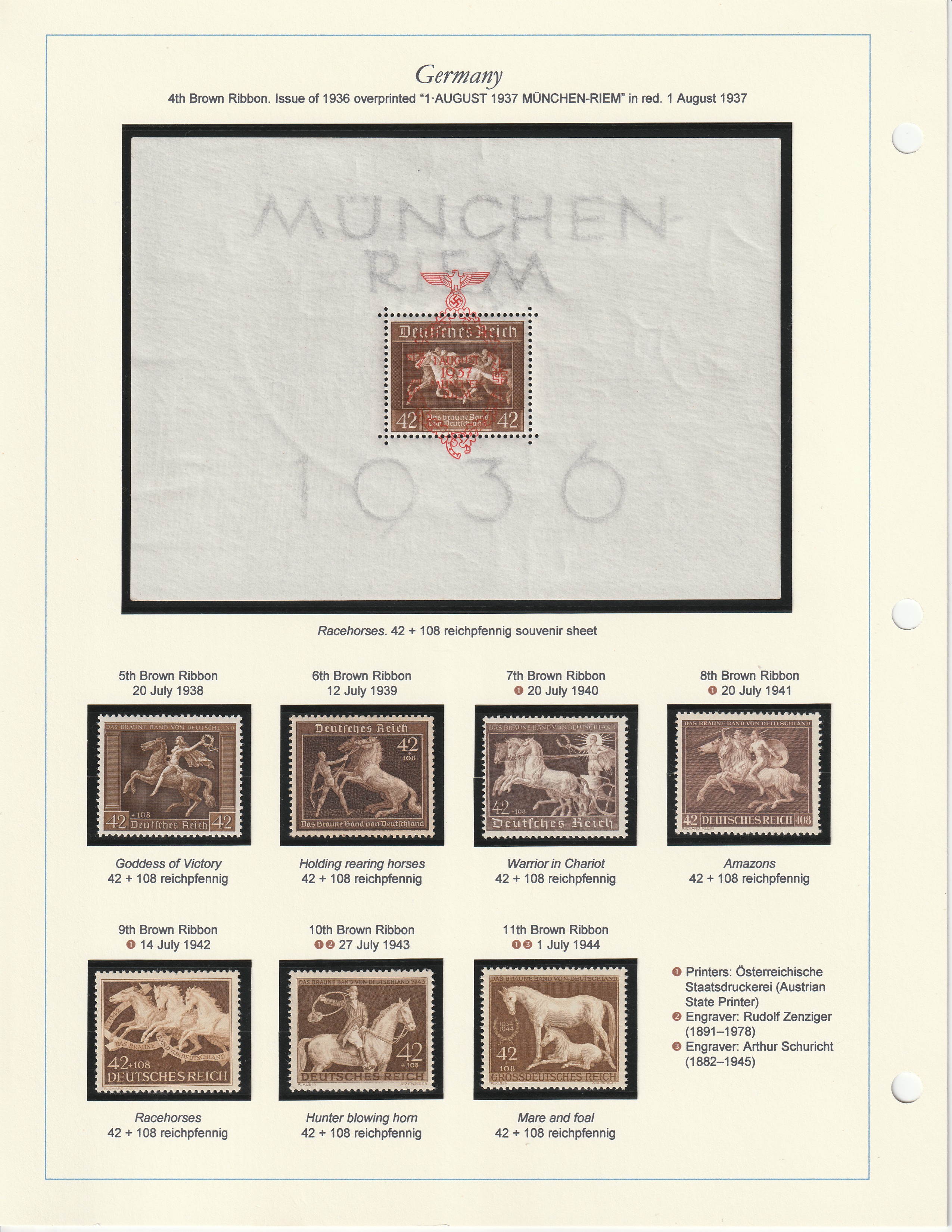
The final Brown Ribbon race took place in 1944, as World War II’s toll on Germany made such events unsustainable. Following the collapse of the Third Reich in 1945, the race was discontinued, and its associated stamps became historical artifacts, reflecting a complex interplay of sport, culture, and politics during a tumultuous period in German history.
 (opens in a new tab)
Germany