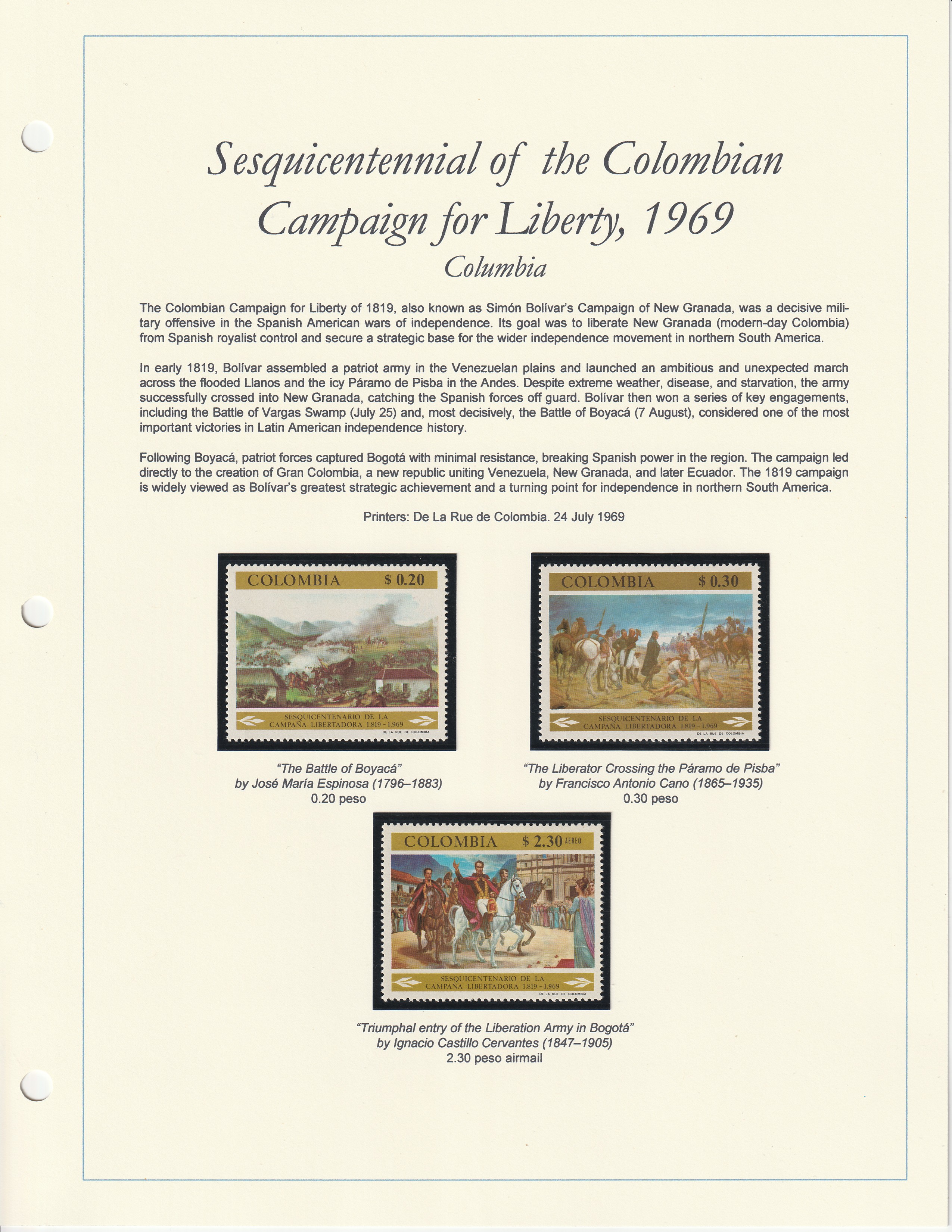
The Colombian Campaign for Liberty of 1819, also known as Simón Bolívar’s Campaign of New Granada, was a decisive military offensive in the Spanish American wars of independence. Its goal was to liberate New Granada (modern-day Colombia) from Spanish royalist control and secure a strategic base for the wider independence movement in northern South America.
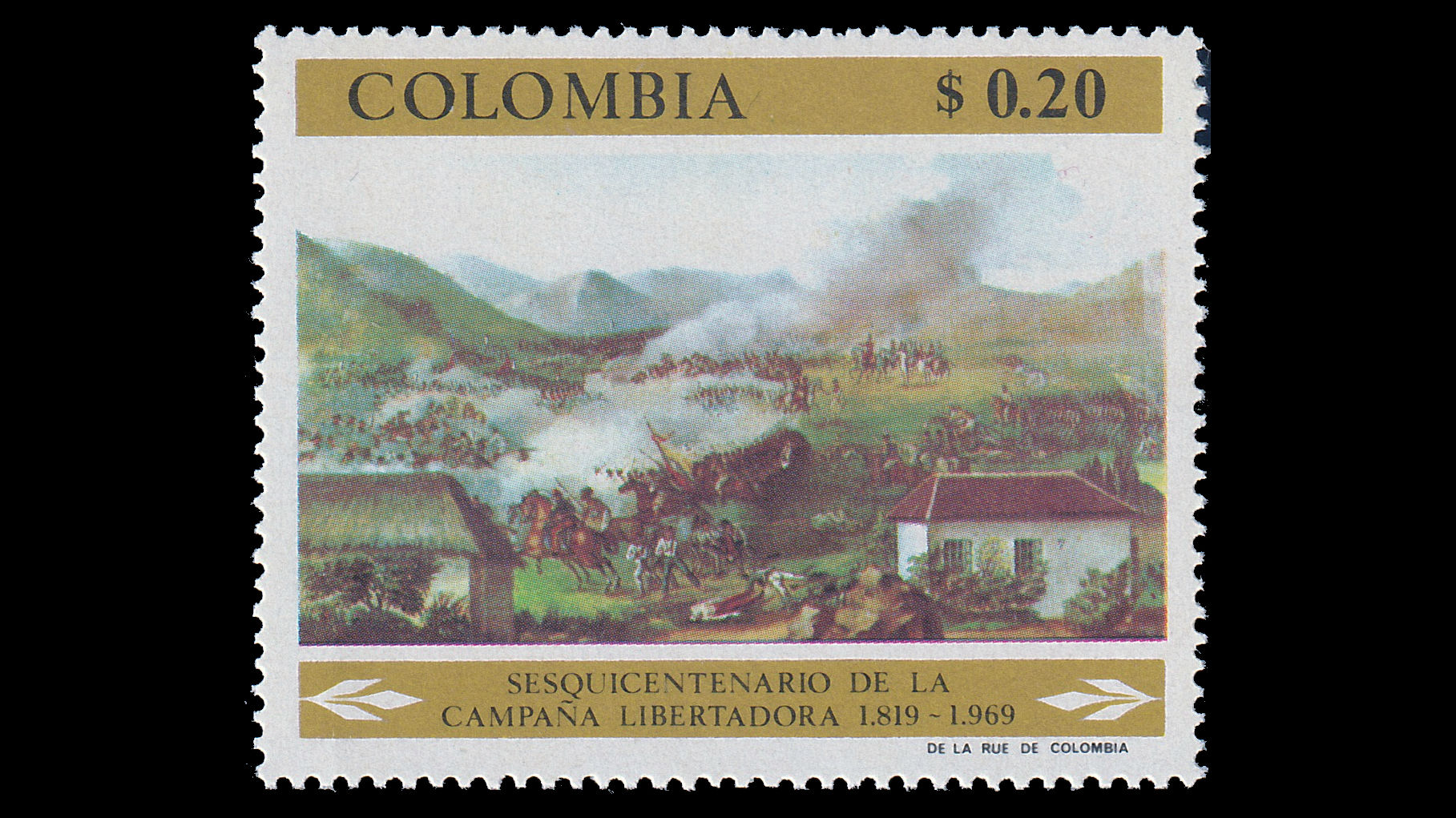
In early 1819, Bolívar assembled a patriot army in the Venezuelan plains and launched an ambitious and unexpected march across the flooded Llanos and the icy Páramo de Pisba in the Andes. Despite extreme weather, disease, and starvation, the army successfully crossed into New Granada, catching the Spanish forces off guard. Bolívar then won a series of key engagements, including the Battle of Vargas Swamp (July 25) and, most decisively, the Battle of Boyacá (7 August), considered one of the most important victories in Latin American independence history.
Following Boyacá, patriot forces captured Bogotá with minimal resistance, breaking Spanish power in the region. The campaign led directly to the creation of Gran Colombia, a new republic uniting Venezuela, New Granada, and later Ecuador. The 1819 campaign is widely viewed as Bolívar’s greatest strategic achievement and a turning point for independence in northern South America.
Printed by De La Rue de Colombia.
 (opens in a new tab)
Colombia