
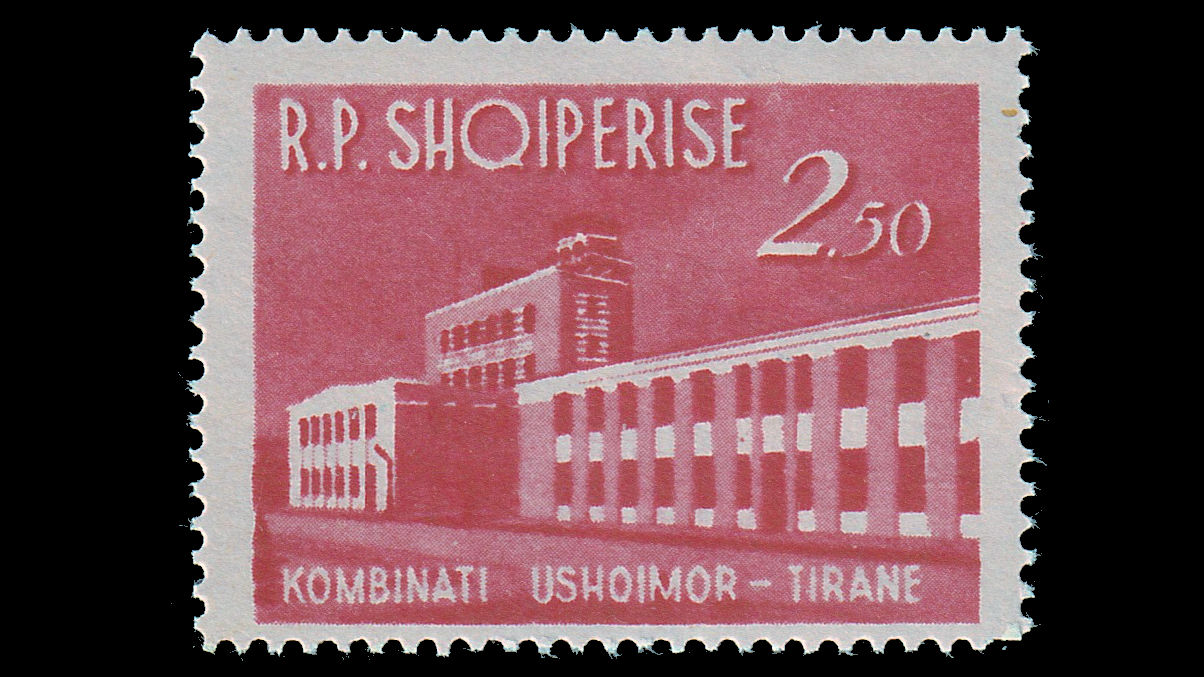
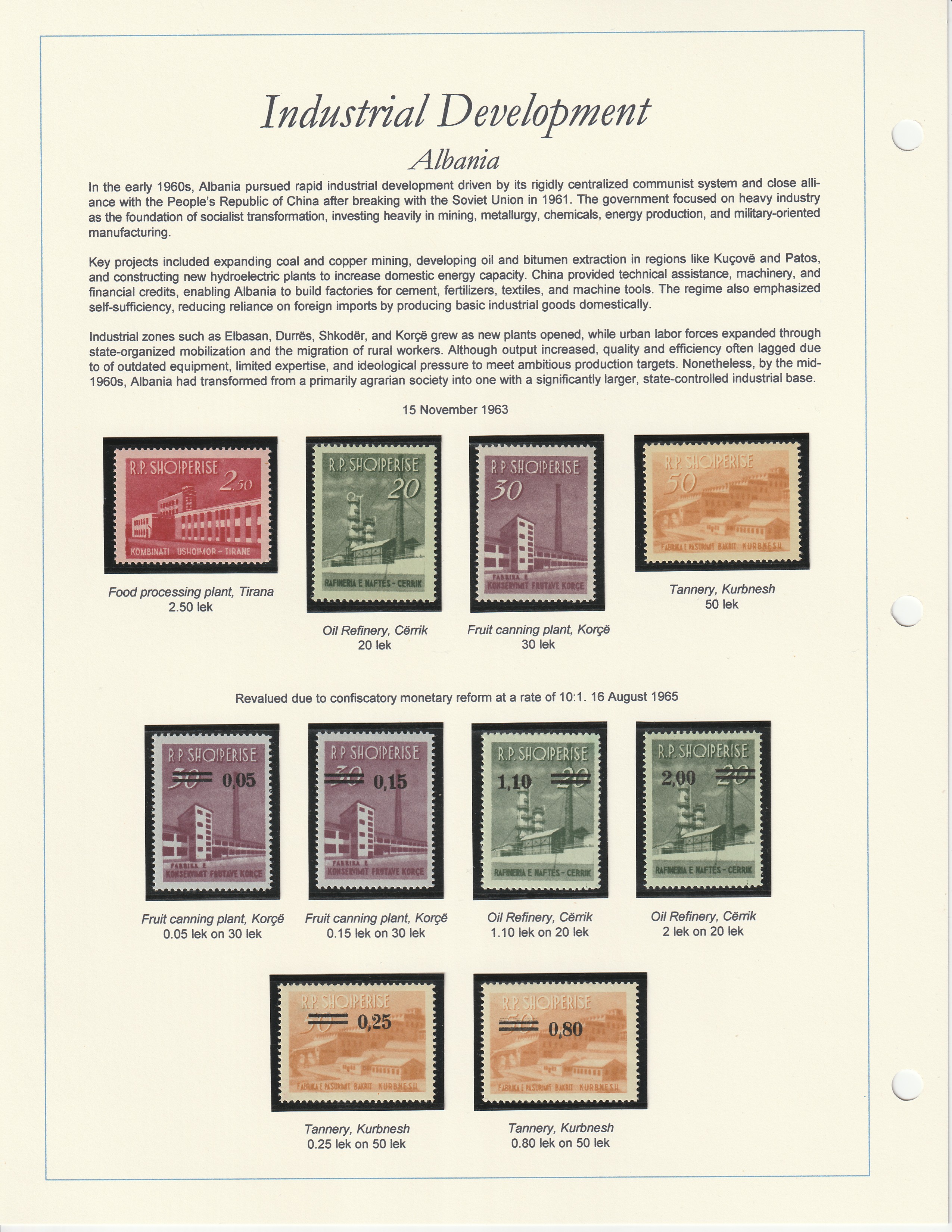
In the early 1960s, Albania pursued rapid industrial development driven by its rigidly centralized communist system and close alliance with the People’s Republic of China after breaking with the Soviet Union in 1961. The government focused on heavy industry as the foundation of socialist transformation, investing heavily in mining, metallurgy, chemicals, energy production, and military-oriented manufacturing.
Key projects included expanding coal and copper mining, developing oil and bitumen extraction in regions like Kuçovë and Patos, and constructing new hydroelectric plants to increase domestic energy capacity. China provided technical assistance, machinery, and financial credits, enabling Albania to build factories for cement, fertilizers, textiles, and machine tools. The regime also emphasized self-sufficiency, reducing reliance on foreign imports by producing basic industrial goods domestically.
Industrial zones such as Elbasan, Durrës, Shkodër, and Korçë grew as new plants opened, while urban labor forces expanded through state-organized mobilization and the migration of rural workers. Although output increased, quality and efficiency often lagged due to of outdated equipment, limited expertise, and ideological pressure to meet ambitious production targets. Nonetheless, by the mid-1960s, Albania had transformed from a primarily agrarian society into one with a significantly larger, state-controlled industrial base.
Issued 15 November 1963, and then revalued due to confiscatory monetary reform at a rate of 10:1 and reissued 16 August 1965.
 (opens in a new tab)
Albania