The Polish People’s Republic (Polska Rzeczpospolita Ludowa, PRL) emerged during World War II under Soviet influence. On 22 July 1944, the Soviets established the Polish Committee of National Liberation (Polski Komitet Wyzwolenia Narodowego, PKWN), which replaced the London-based Polish government-in-exile. On 1 January 1945, it became the Provisional Government of the Republic of Poland (Rząd Tymczasowy Rzeczypospolitej Polskiej, RTRP), and on 28 June 1945, it merged with non-communist elements to form the Provisional Government of National Unity (Tymczasowy Rząd Jedności Narodowej, TRJN), though real power remained with the communists and the Soviet-backed Polish Workers’ Party.
In 1947, after heavily manipulated elections, the communists consolidated control, and in 1952 Poland was officially renamed the Polish People’s Republic (Polska Rzeczpospolita Ludowa) under a new Stalinist constitution. The period saw rapid industrialization, collectivization efforts, and political repression. Major crises included the 1956 Poznań protests, leading to limited liberalization under Władysław Gomułka (1905–1982); further unrest occurred with the 1970 Baltic Coast protests and the rise of Edward Gierek’s (1913–2001) reformist but ultimately unsuccessful economic policies.
Mounting economic problems and opposition movements culminated in the formation of Solidarity (Solidarność) in 1980, the first independent trade union in the Eastern Bloc. After martial law (1981–1983) and ongoing negotiations, the Round Table Talks (Rozmowy Okrągłego Stołu) in 1989 led to semi-free elections on 4 June 1989, ending communist rule and the Polish People’s Republic.
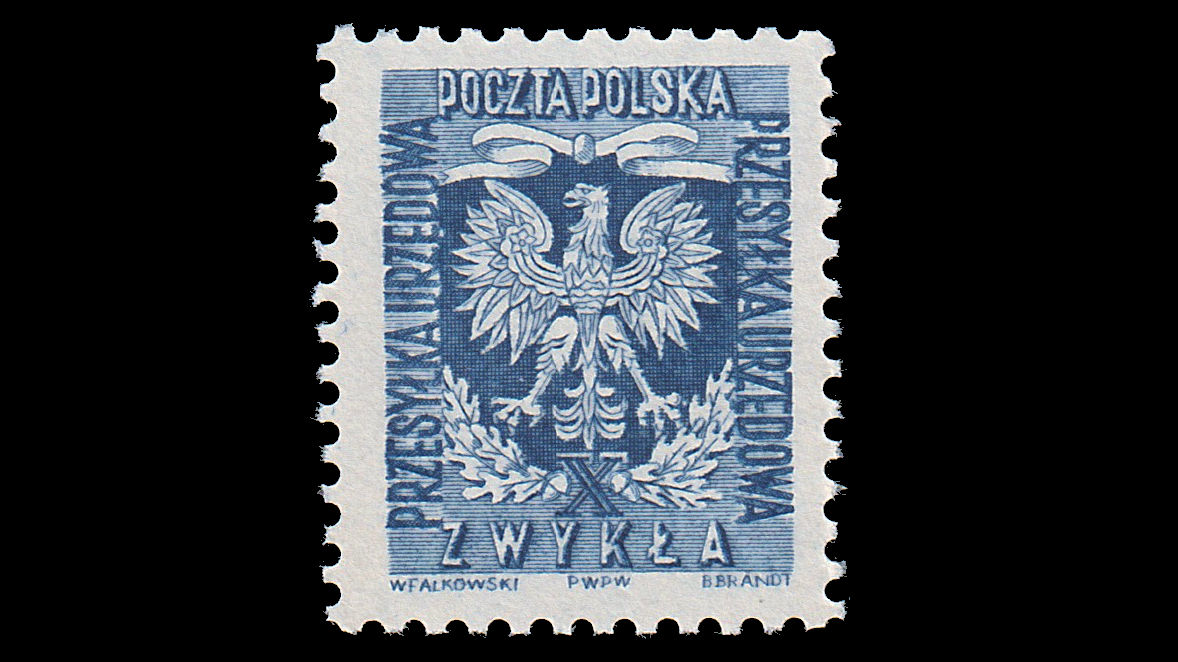
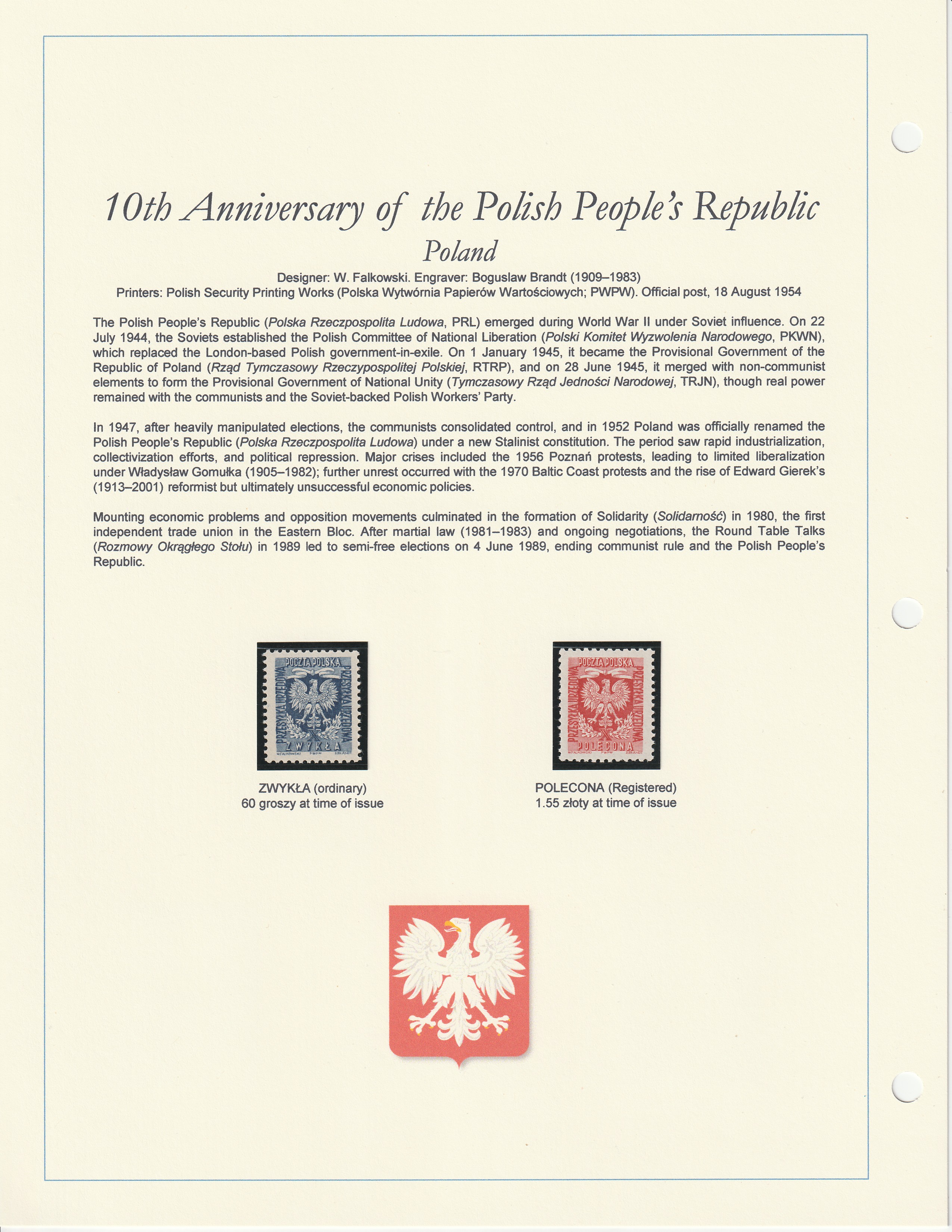
Official post stamps designed by W. Falkowski, engraved by Boguslaw Brandt (1909–1983), and printed by the Polish Security Printing Works (Polska Wytwórnia Papierów Wartościowych; PWPW). Issued 18 August 1954.
Poland