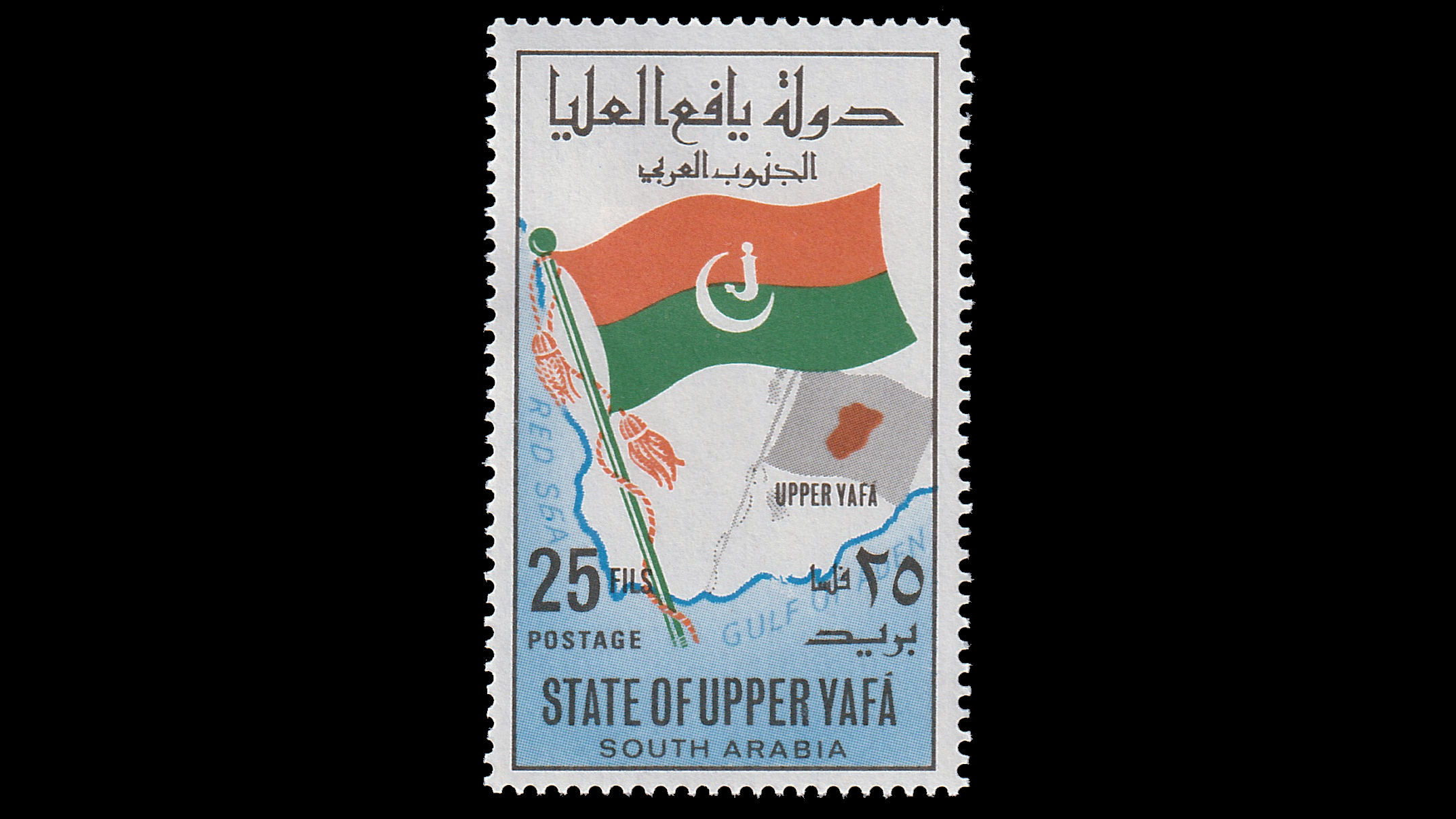
The State of Upper Yafa was a small, semi-autonomous sheikhdom in the mountainous region of southern Arabia, located in what is now Yemen. It was one of the five Yafa tribal states and part of the Eastern Protectorate under British influence during the late 19th and early 20th centuries. Unlike many neighboring states, Upper Yafa maintained a high degree of internal independence due to its rugged terrain and strong tribal structures. The state was governed by multiple sheikhs rather than a single ruler, making it somewhat decentralized. Upper Yafa avoided deep integration into British administrative systems and resisted participation in broader protectorate politics. Its tribal confederation remained the primary political authority.
In 1967, with the collapse of British rule in Aden and the surrounding protectorates, Upper Yafa was incorporated into the newly founded People’s Republic of South Yemen (later the People’s Democratic Republic of Yemen). The traditional leadership system was abolished, and the region was reorganized under socialist governance. Following Yemeni unification in 1990, Upper Yafa became part of the Republic of Yemen, retaining its distinct tribal identity but no longer functioning as an independent state.
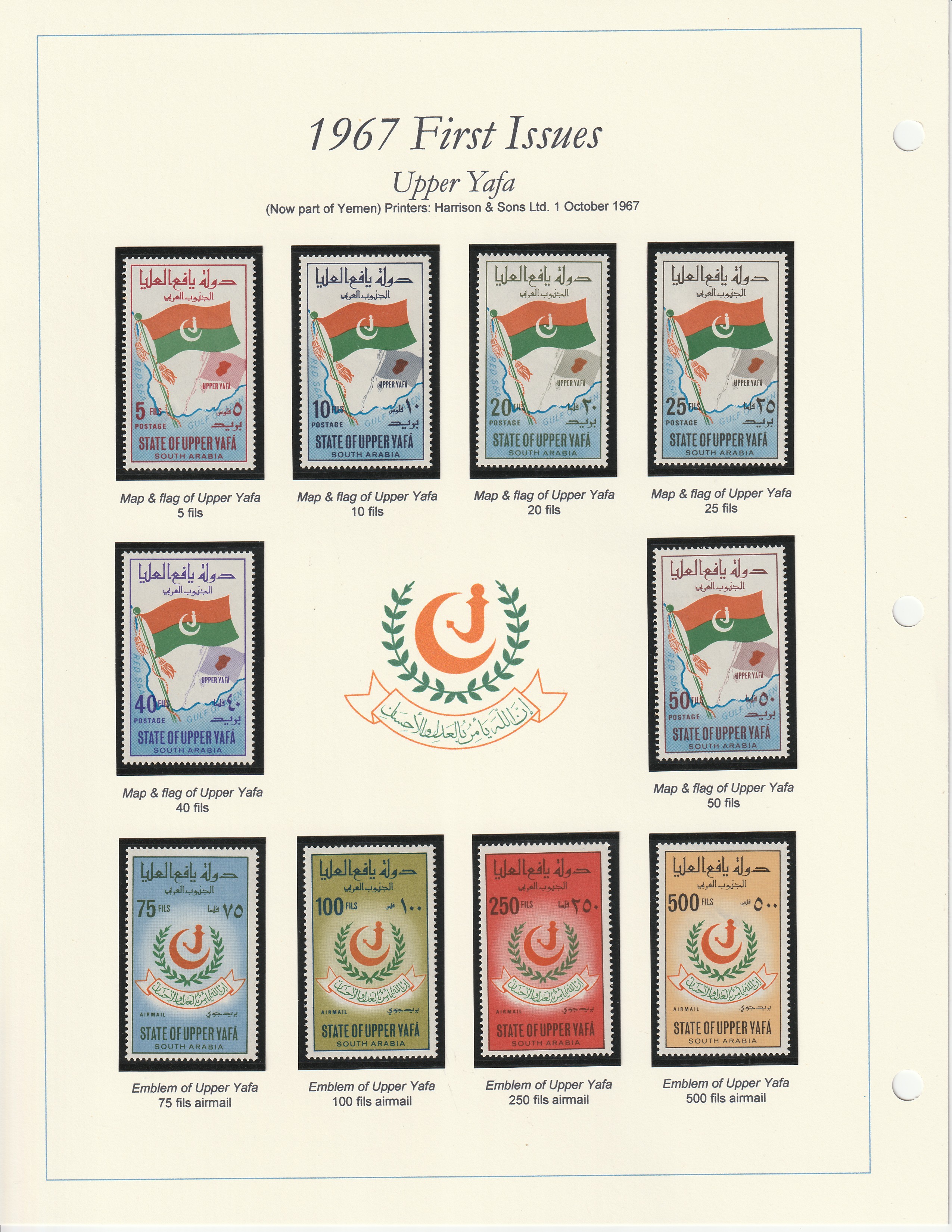

Upper Yafa > Yemen