
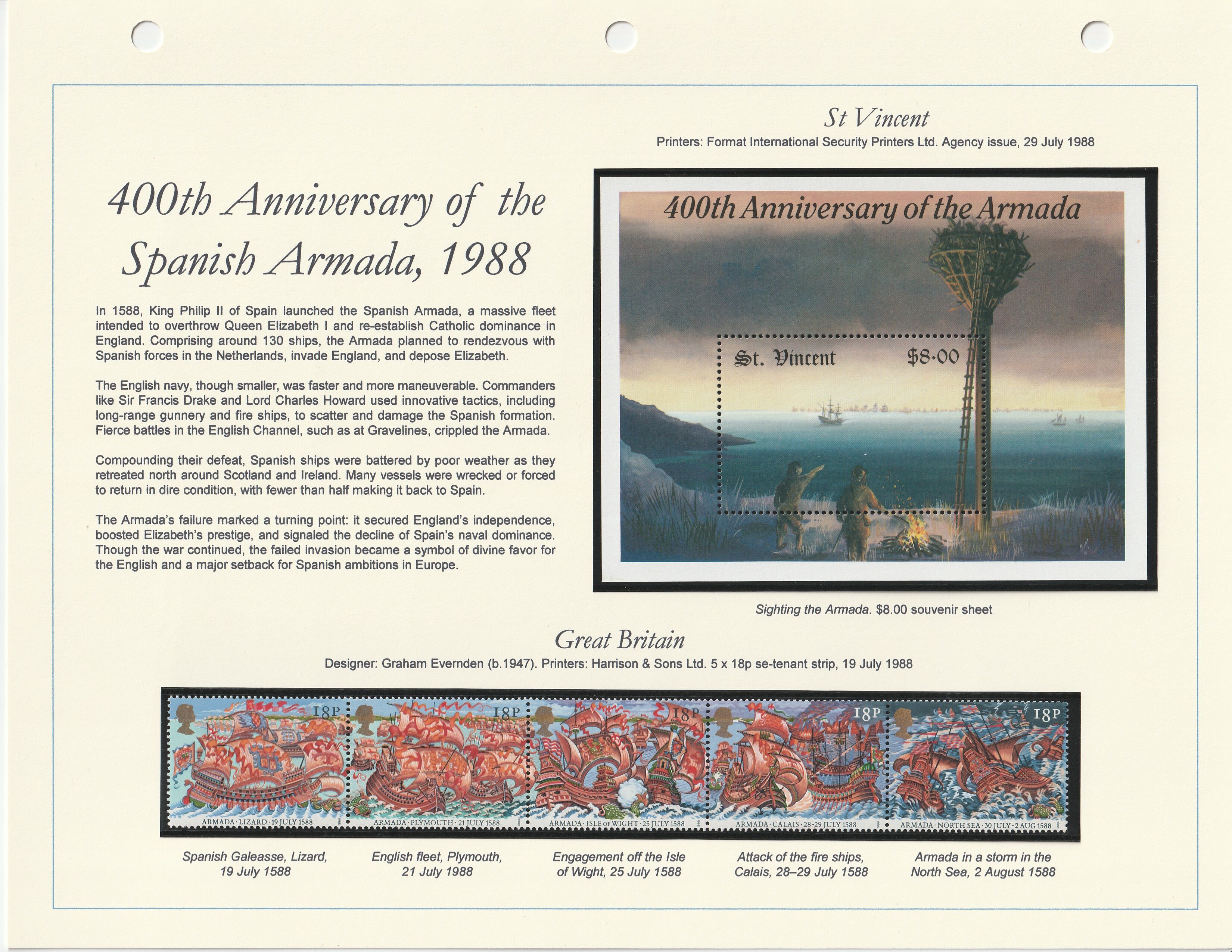
In 1588, King Philip II of Spain launched the Spanish Armada, a massive fleet intended to overthrow Queen Elizabeth I and re-establish Catholic dominance in England. Comprising around 130 ships, the Armada planned to rendezvous with Spanish forces in the Netherlands, invade England, and depose Elizabeth.
The English navy, though smaller, was faster and more maneuverable. Commanders like Sir Francis Drake and Lord Charles Howard used innovative tactics, including long-range gunnery and fire ships, to scatter and damage the Spanish formation. Fierce battles in the English Channel, such as at Gravelines, crippled the Armada.
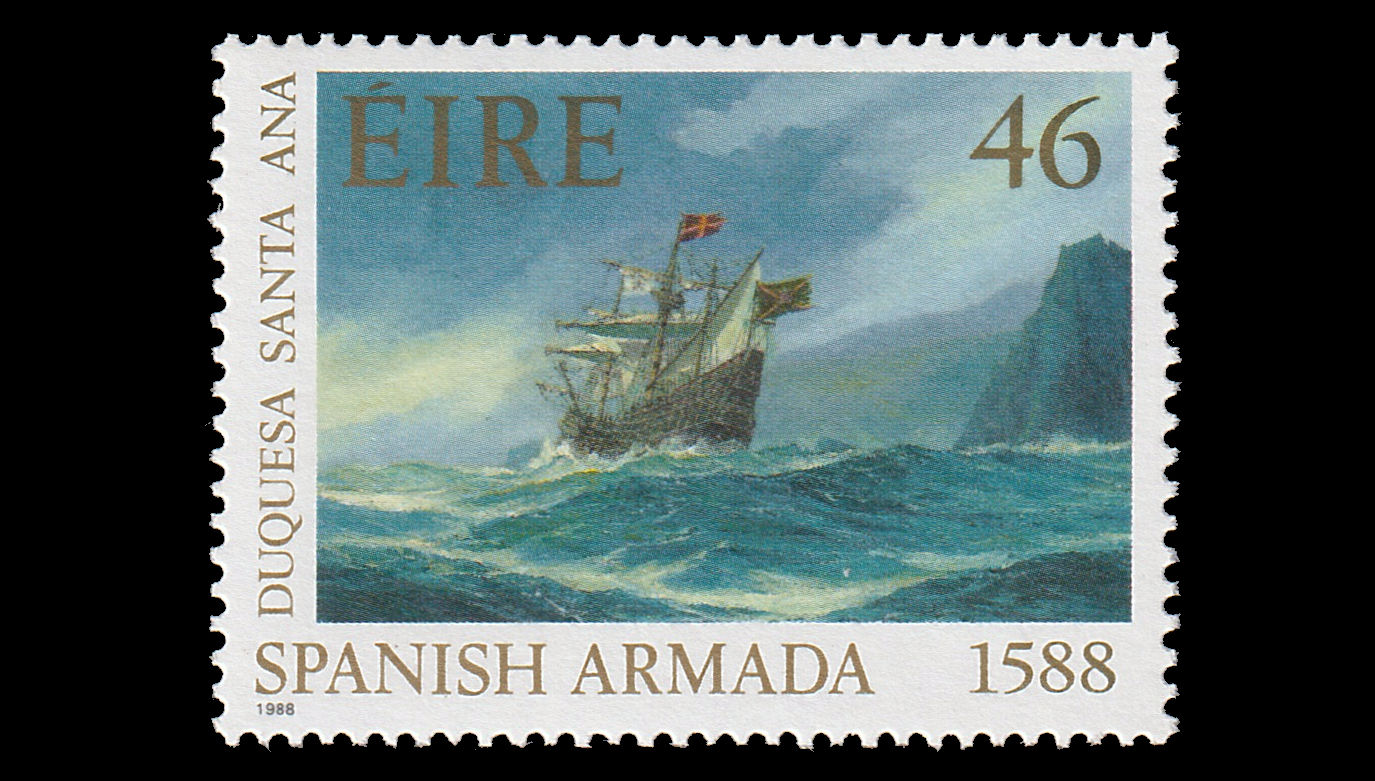
Compounding their defeat, Spanish ships were battered by poor weather as they retreated north around Scotland and Ireland. Many vessels were wrecked or forced to return in dire condition, with fewer than half making it back to Spain.
The Armada’s failure marked a turning point: it secured England’s independence, boosted Elizabeth’s prestige, and signaled the decline of Spain’s naval dominance. Though the war continued, the failed invasion became a symbol of divine favor for the English and a major setback for Spanish ambitions in Europe.
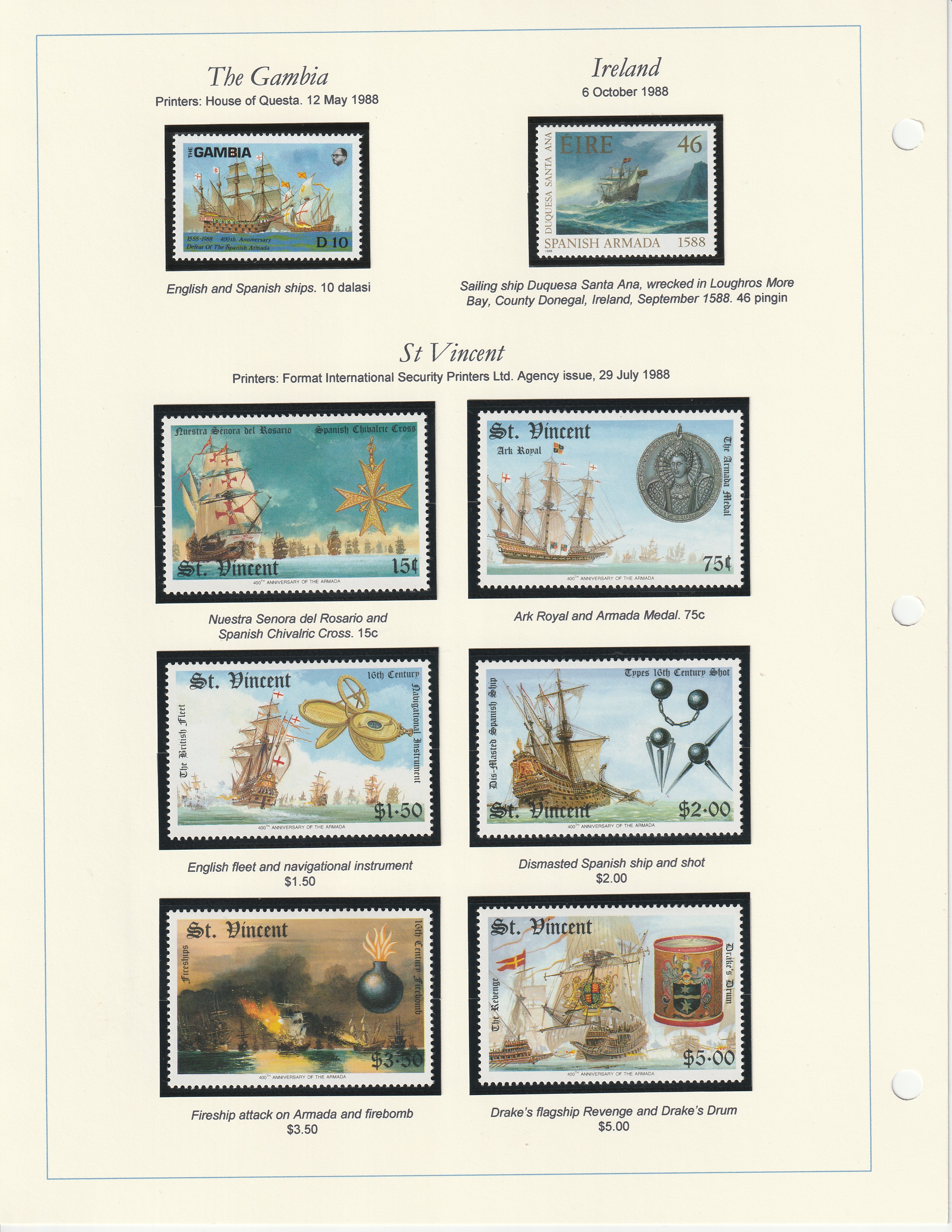

Gambia

Great Britain

Ireland

St Vincent