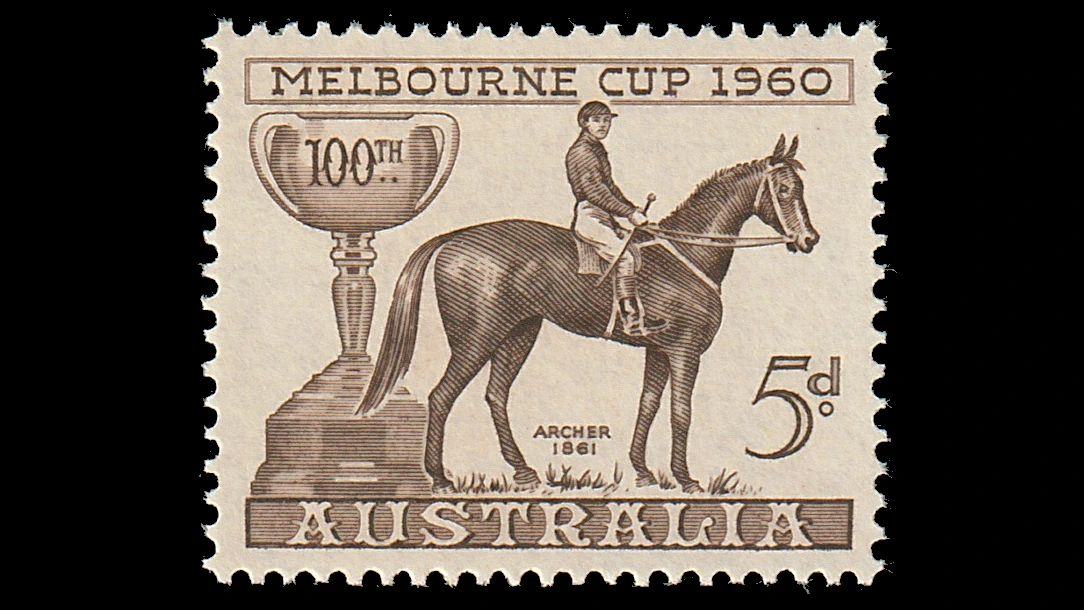
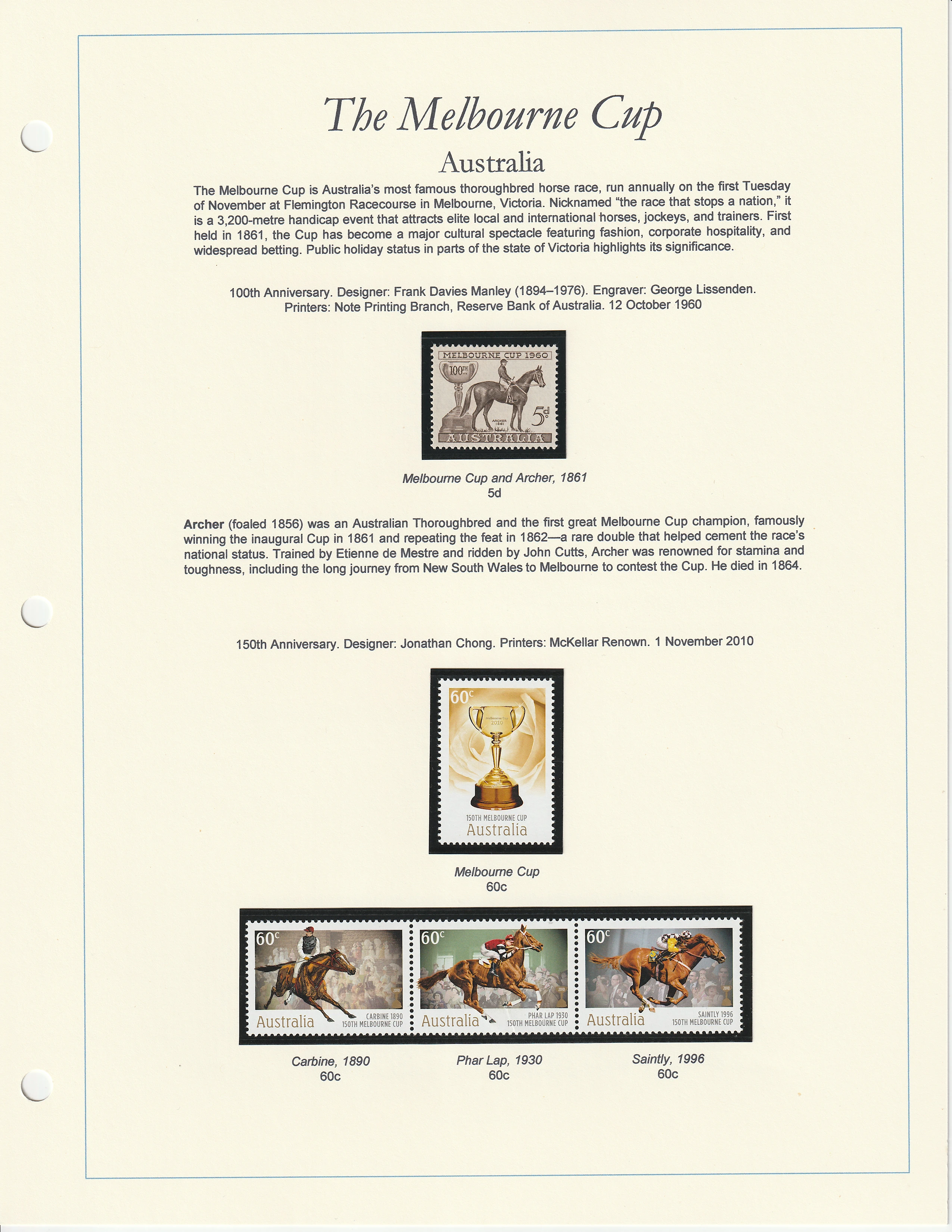
The Melbourne Cup is Australia’s most famous thoroughbred horse race, run annually on the first Tuesday of November at Flemington Racecourse in Melbourne, Victoria. Nicknamed “the race that stops a nation,” it is a 3,200-metre handicap event that attracts elite local and international horses, jockeys, and trainers. First held in 1861, the Cup has become a major cultural spectacle featuring fashion, corporate hospitality, and widespread betting. Public holiday status in parts of the state of Victoria highlights its significance.
The Horses:
- Archer (foaled 1856, Melbourne Cup winner, 1861) was an Australian Thoroughbred and the first great Melbourne Cup champion, famously winning the inaugural Cup in 1861 and repeating the feat in 1862—a rare double that helped cement the race’s national status. Trained by Etienne de Mestre and ridden by John Cutts, Archer was renowned for stamina and toughness, including the long journey from New South Wales to Melbourne to contest the Cup. He died in 1864.
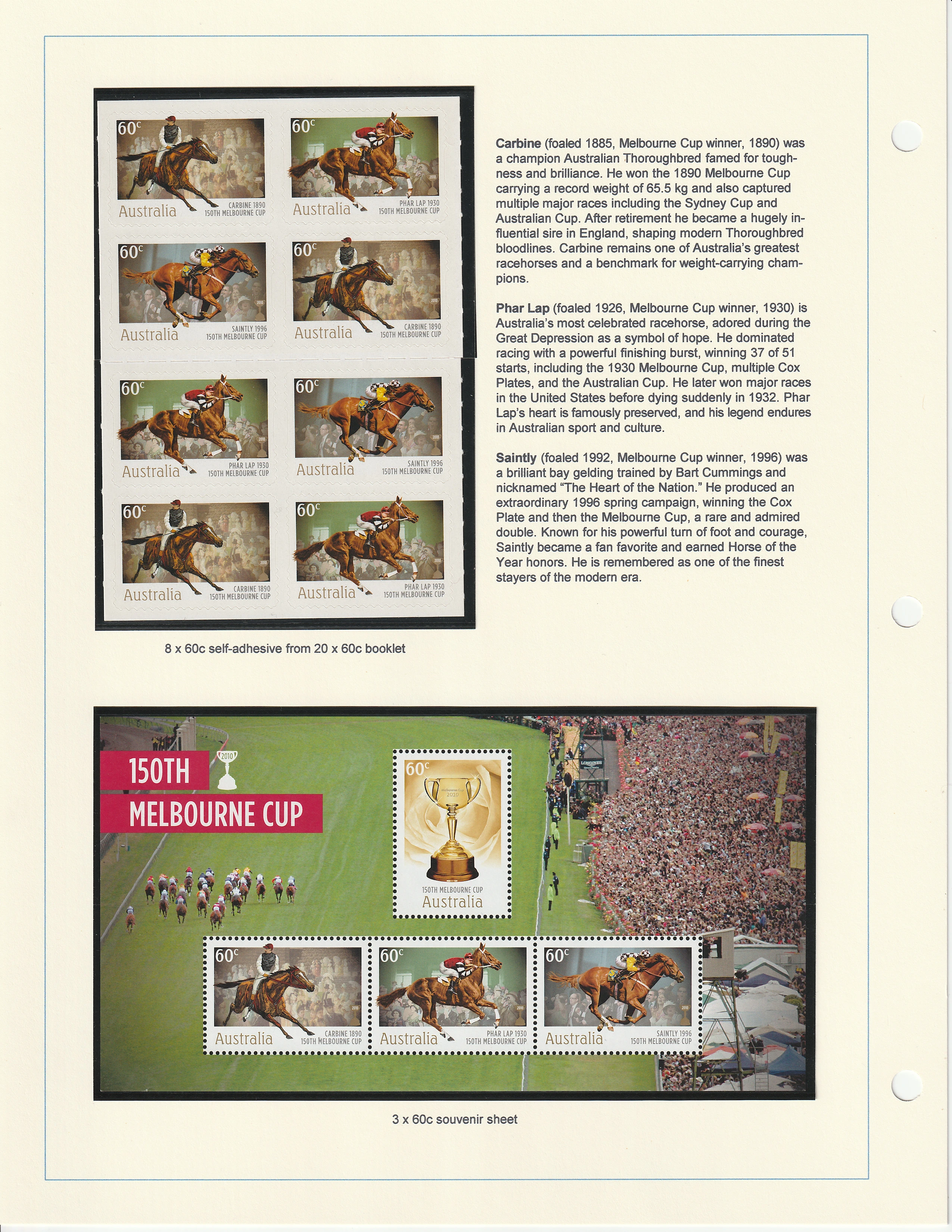
- Carbine (foaled 1885, Melbourne Cup winner, 1890) was a champion Australian Thoroughbred famed for toughness and brilliance. He won the 1890 Melbourne Cup carrying a record weight of 65.5 kg and also captured multiple major races including the Sydney Cup and Australian Cup. After retirement he became a hugely influential sire in England, shaping modern Thoroughbred bloodlines. Carbine remains one of Australia’s greatest racehorses and a benchmark for weight-carrying champions.
- Phar Lap (foaled 1926, Melbourne Cup winner, 1930) is Australia’s most celebrated racehorse, adored during the Great Depression as a symbol of hope. He dominated racing with a powerful finishing burst, winning 37 of 51 starts, including the 1930 Melbourne Cup, multiple Cox Plates, and the Australian Cup. He later won major races in the United States before dying suddenly in 1932. Phar Lap’s heart is famously preserved, and his legend endures in Australian sport and culture.
- Saintly (foaled 1992, Melbourne Cup winner, 1996) was a brilliant bay gelding trained by Bart Cummings and nicknamed “The Heart of the Nation.” He produced an extraordinary 1996 spring campaign, winning the Cox Plate and then the Melbourne Cup, a rare and admired double. Known for his powerful turn of foot and courage, Saintly became a fan favorite and earned Horse of the Year honors. He is remembered as one of the finest stayers of the modern era.

Australia