

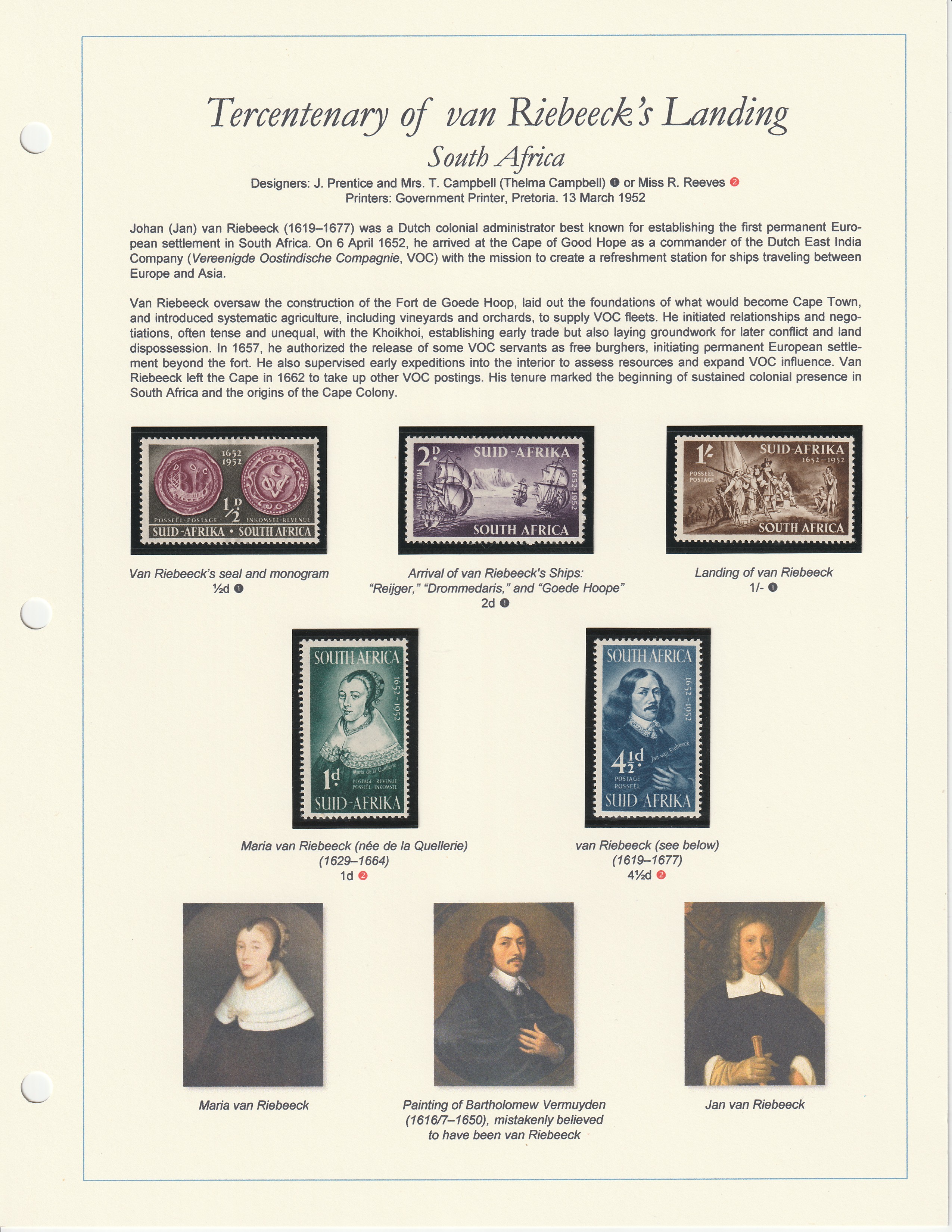
Johan (Jan) van Riebeeck (1619–1677) was a Dutch colonial administrator best known for establishing the first permanent European settlement in South Africa. On 6 April 1652, he arrived at the Cape of Good Hope as a commander of the Dutch East India Company (Vereenigde Oostindische Compagnie, VOC) with the mission to create a refreshment station for ships traveling between Europe and Asia.
Van Riebeeck oversaw the construction of the Fort de Goede Hoop, laid out the foundations of what would become Cape Town, and introduced systematic agriculture, including vineyards and orchards, to supply VOC fleets. He initiated relationships and negotiations, often tense and unequal, with the Khoikhoi, establishing early trade but also laying groundwork for later conflict and land dispossession. In 1657, he authorized the release of some VOC servants as free burghers, initiating permanent European settlement beyond the fort. He also supervised early expeditions into the interior to assess resources and expand VOC influence. Van Riebeeck left the Cape in 1662 to take up other VOC postings. His tenure marked the beginning of sustained colonial presence in South Africa and the origins of the Cape Colony.

South Africa